
Credentialing is not a one time task. It is a cycle that repeats every few years, and missing a single deadline can quietly shut a provider out of network, stop payments, and put an entire practice at risk. The clinics that stay ahead of recredentialing are the ones that treat it as an ongoing process rather than a paperwork emergency that shows up every few years.
Every provider who joins a payer network agrees to something most patients never think about. Licenses expire. Board certifications need renewal. Malpractice coverage has to stay active. Payer contracts require periodic reverification. Recredentialing exists to confirm that all of this is still true, usually every two to three years, and payers do not send gentle reminders forever. When a deadline is missed, the consequence is not a warning letter. It is termination from the network, and that means every claim submitted afterward can be denied.
This is why recredentialing deserves the same attention as initial provider enrollment. It connects directly to a strong credentialing process, and it works hand in hand with the revenue cycle discipline covered in our other guides on avoiding claim denials.
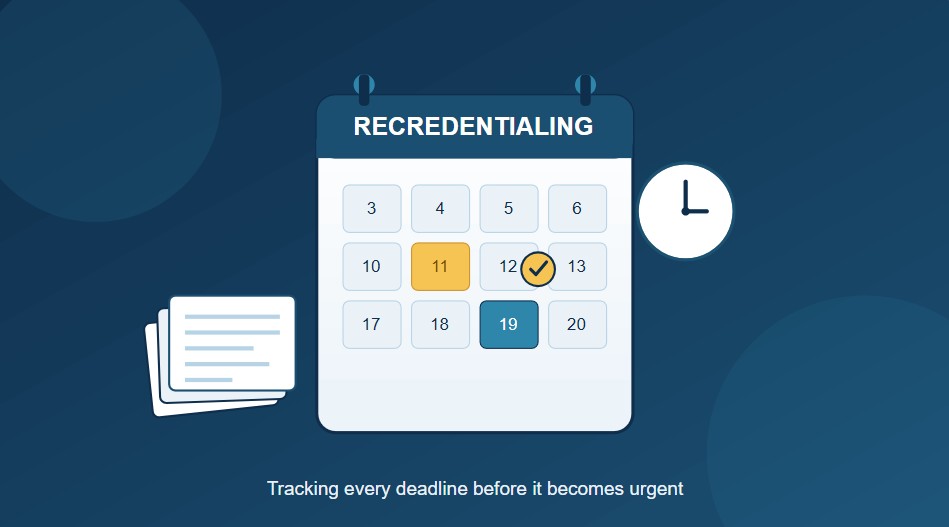
Recredentialing is the process payers use to reverify a provider's qualifications after their initial enrollment period ends. It typically covers a current medical license, an active DEA registration where applicable, board certification status, malpractice insurance coverage, work history, and any sanctions or malpractice claims filed since the last review.
Most commercial payers follow a cycle set by accreditation bodies such as NCQA, which generally requires recredentialing every three years. Medicare and Medicaid have their own revalidation timelines that do not always match commercial payer schedules, which is exactly why practices with multiple contracts often lose track of what is due and when.
| Payer Type | Typical Cycle | Governing Standard |
|---|---|---|
| Commercial Payers | Every 3 years | NCQA guidelines |
| Medicare | Every 3 to 5 years | CMS revalidation cycle |
| Medicaid | Every 3 to 5 years, varies by state | State Medicaid agency rules |
| Hospital Privileges | Every 2 years | Joint Commission standards |
| Document or Item | Why It Matters |
|---|---|
| Current medical license | Confirms the provider is legally authorized to practice |
| DEA registration | Required for providers who prescribe controlled substances |
| Board certification status | Verifies specialty training remains active and current |
| Malpractice insurance certificate | Confirms continuous coverage with no lapses |
| Work history and references | Fills any gaps since the last credentialing review |
| Sanctions and malpractice history | Discloses any claims or actions filed since last review |
| Updated CAQH attestation | Keeps the profile payers pull from accurate and current |
A provider might carry contracts with a dozen different payers, each with its own recredentialing cycle and its own paperwork requirements. Without a single system tracking every date, it becomes easy for one deadline to slip through while attention is focused on the others.
Payers are supposed to send reminders before a credentialing cycle expires, but these notices are often delayed, sent to the wrong contact, or missed entirely in a busy inbox. Practices that depend entirely on payer outreach are relying on a system they do not control.
Many commercial payers pull recredentialing information directly from a provider's CAQH profile. If that profile has not been reattested recently or contains outdated license or insurance information, the entire recredentialing process can stall even when the provider's actual documents are current.
Recredentialing is often approached as a scramble that begins only after a reminder arrives. Gathering updated licenses, certificates, and insurance documents under time pressure increases the odds that something gets submitted late or incorrectly.
When no single person or team owns the recredentialing calendar, tasks fall between departments. Front office staff assume billing is tracking it, billing assumes credentialing is tracking it, and the deadline arrives before anyone realizes it was not being tracked at all.
Practices that rarely face credentialing lapses do not have less paperwork than everyone else. They simply have a system that surfaces expirations well before they become urgent. A recredentialing calendar that flags every license, certification, and payer deadline months in advance turns a recurring emergency into a routine task.
Some practices assume that once a provider is credentialed with a payer, the relationship is stable indefinitely. In reality, every credential has a shelf life, and the providers who stay in network longest are the ones whose documentation never has a chance to lapse in the first place.
A missed recredentialing deadline can result in a provider being dropped from a payer's network, meaning every patient covered by that payer may need to be rescheduled with another provider or seen as out of network.
Claims submitted after a lapse are frequently denied outright, and recovering that revenue often requires a lengthy appeals process, if it can be recovered at all.
Patients who learn their trusted provider is suddenly out of network often have to choose between paying more out of pocket or switching providers entirely, which damages the relationship the practice worked hard to build.
Reinstating a provider after a lapse usually takes far longer than the original recredentialing cycle would have, pulling staff time away from patients and other priorities for weeks or months.
Staying ahead of expirations is not about working harder during renewal season. It is a set of consistent habits built into everyday operations.
Every license, certification, insurance policy, and payer contract should live on one calendar with reminders set well before each deadline, not just when the payer happens to send a notice.
Reattesting a CAQH profile on a regular schedule, rather than only when a payer requests it, prevents outdated information from stalling a recredentialing review at the worst possible time.
One person or team should be responsible for the recredentialing calendar from start to finish, with a defined process for what happens when a document is close to expiring.
Beginning license and certification renewals well before the expiration date, rather than waiting for a final notice, builds in a buffer for delays that are common with state boards and certifying bodies.
Reviewing every provider's credentialing file at set intervals, rather than only during an active renewal, catches small gaps such as an outdated address or an expired malpractice certificate before they turn into a bigger problem.
Worth noting: Many practices only discover a credentialing gap when a claim is denied. By that point, the provider may have already been treating patients out of network for weeks. Catching an expiration before it lapses is always less costly than fixing the aftermath.
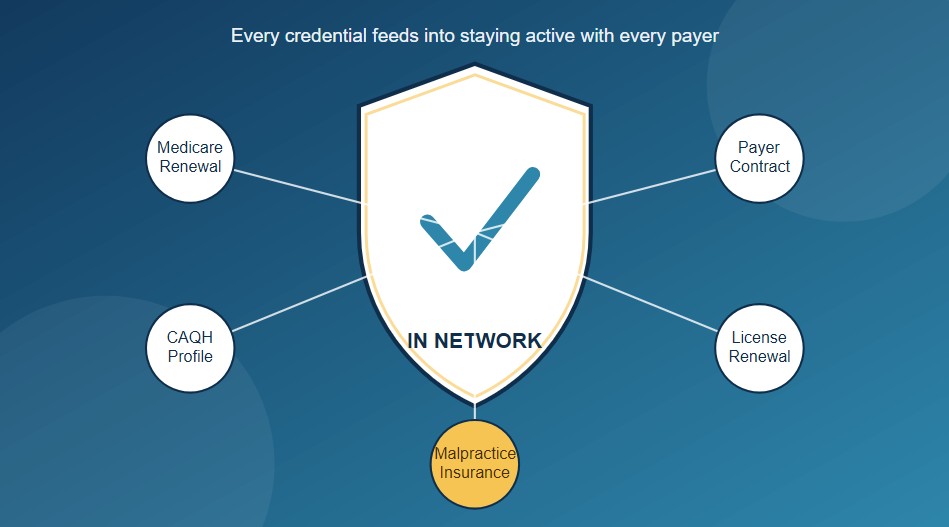
A practice with a healthy recredentialing process rarely deals with sudden network terminations or a spike in denied claims tied to credentialing issues. Alongside this, provider files stay complete and current between renewal cycles instead of needing a rush of updates right before a deadline.
These signals work together. A practice cannot avoid claim denials while ignoring expired credentials, and it cannot keep providers consistently in network without a system that tracks every deadline well in advance. Watching these indicators together gives a much clearer picture of whether recredentialing is truly under control or simply has not caused a visible problem yet.
Recredentialing is often treated as an administrative task handled quietly in the background, but its effects reach every part of a practice. Providers experience it as uninterrupted ability to see and bill for their patients. Billing teams experience it as fewer denied claims tied to network status. Leadership experiences it as stable, predictable revenue that does not depend on scrambling to fix a lapse after the fact. Treating recredentialing as an ongoing operational priority, rather than a periodic paperwork task, is what separates practices that stay ahead of expirations from those constantly recovering from them.
At Med Dabster, we help practices build the tracking and follow through that keeps every provider credentialed on time, so that a missed date never turns into lost revenue or disrupted patient care.
Most commercial payers require recredentialing every two to three years, often following NCQA guidelines, while Medicare and Medicaid follow their own separate revalidation schedules. Because these cycles rarely line up across payers, practices with multiple contracts need to track each deadline individually rather than assuming one timeline applies to all.
Missing a deadline can result in the provider being terminated from that payer's network, which typically means claims submitted afterward are denied and patients covered by that payer may need to be seen as out of network until the provider is reinstated. Reinstatement is usually slower and more difficult than the original recredentialing process.
Many payers pull recredentialing data directly from CAQH, so if the profile has not been reattested recently or still lists an expired license or insurance policy, the review can stall even if the provider's actual documents are current. Keeping the profile updated year-round prevents this kind of delay.
Ideally one designated person or team owns the recredentialing calendar for the entire practice, with clear responsibility for flagging upcoming expirations and starting renewals early. Without a single owner, tasks often fall between departments and deadlines are more likely to be missed.
The most effective approach is maintaining a centralized calendar that tracks every license, certification, and payer deadline months in advance, paired with regular provider file audits rather than waiting for a payer's reminder notice. Starting the renewal process early builds in enough buffer to handle the delays that are common with state boards and certifying bodies.


