
The average medical practice loses thousands of dollars each month due to missed appointments, delayed payments, and inefficient administrative processes. For many practices, these hidden revenue leaks can add up to well over $100,000 annually.
The challenge isn't just attracting patients. It's keeping them engaged throughout their healthcare journey.
Modern patient engagement solutions help practices reduce no-shows, improve collections, streamline workflows, and create better patient experiences. For specialties such as behavioral health, cardiology, and primary care, where continuity of care is critical, effective patient engagement can directly impact both clinical outcomes and financial performance.
At Meddabster, we help healthcare organizations strengthen patient engagement while improving revenue cycle performance through medical billing, credentialing, and healthcare marketing solutions.
Modern patient engagement refers to the use of digital tools and streamlined processes that make it easier for patients to interact with your practice.
It goes beyond convenience. It creates a connected experience where patients feel informed, supported, and more likely to follow through with care. Practices that invest in engagement often experience improvements in patient satisfaction, operational efficiency, collections, and overall revenue cycle performance.
Patient engagement plays a particularly important role in specialties where regular follow-ups and ongoing treatment plans are essential.
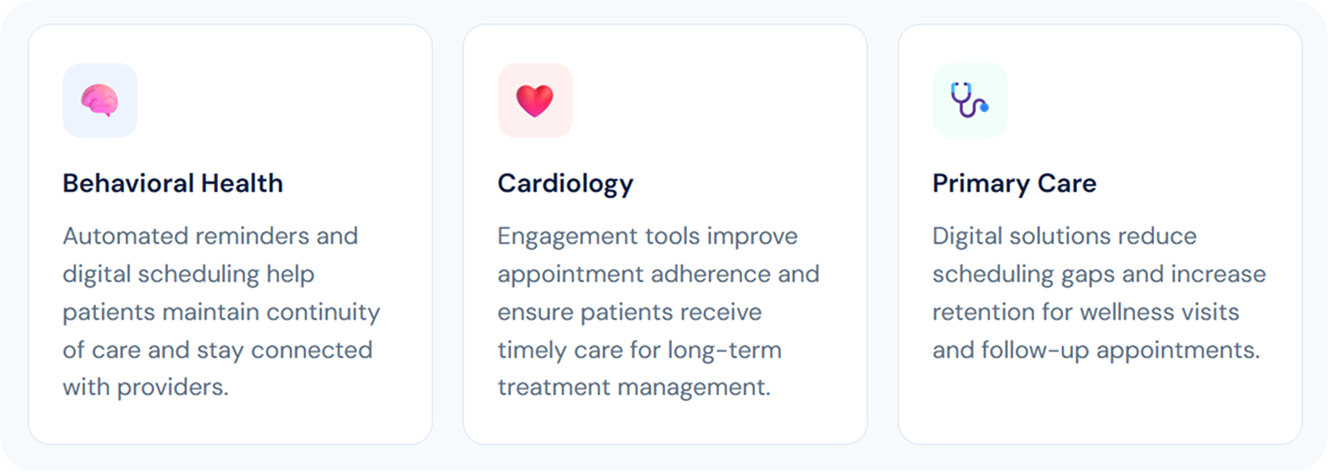
No-shows remain one of healthcare's most common revenue challenges. Every missed appointment affects provider productivity, patient outcomes, and practice profitability.
Manual reminder calls consume valuable staff time and can be inconsistent. Automated text and email reminders help patients remember appointments and make it easier to confirm attendance.
When patients can quickly reschedule online, they are less likely to miss appointments altogether. This helps practices keep schedules full while improving the patient experience.
Providing patients with easy access to appointment information, instructions, and follow-up care reduces confusion and encourages attendance. Many practices report meaningful improvements in attendance rates after implementing patient engagement technology.
Collections are often delayed because patients do not fully understand their financial responsibility or lack convenient payment options.
Providing clear financial expectations before appointments helps build trust and reduces billing disputes.
Online payment portals make it easier for patients to pay balances at their convenience, often contributing to improved collection performance and reduced outstanding receivables.
Automated reminders help patients stay informed about outstanding balances while reducing manual follow-up efforts for staff.
When patient engagement tools work alongside revenue cycle management systems, practices gain greater visibility into financial performance and reimbursement trends.
Healthcare teams are increasingly burdened by administrative responsibilities. Modern patient engagement solutions can help reduce manual work through
By automating repetitive tasks, staff can focus more on patient care and less on administrative processes
Patient engagement starts long before the appointment. A strong online presence helps practices connect with prospective patients and build trust before the first interaction.
Effective healthcare digital marketing includes search engine optimization (SEO), reputation management, targeted patient acquisition campaigns, website optimization, and educational content marketing. Together, these efforts support a seamless patient journey from discovery to long-term retention.
Implementing effective patient engagement strategies requires more than technology. It requires the right operational partner. At Meddabster, we help healthcare organizations improve patient engagement while strengthening their revenue cycle through:
Our team works closely with healthcare providers to identify revenue leaks, improve patient communication, streamline workflows, and maximize reimbursements.
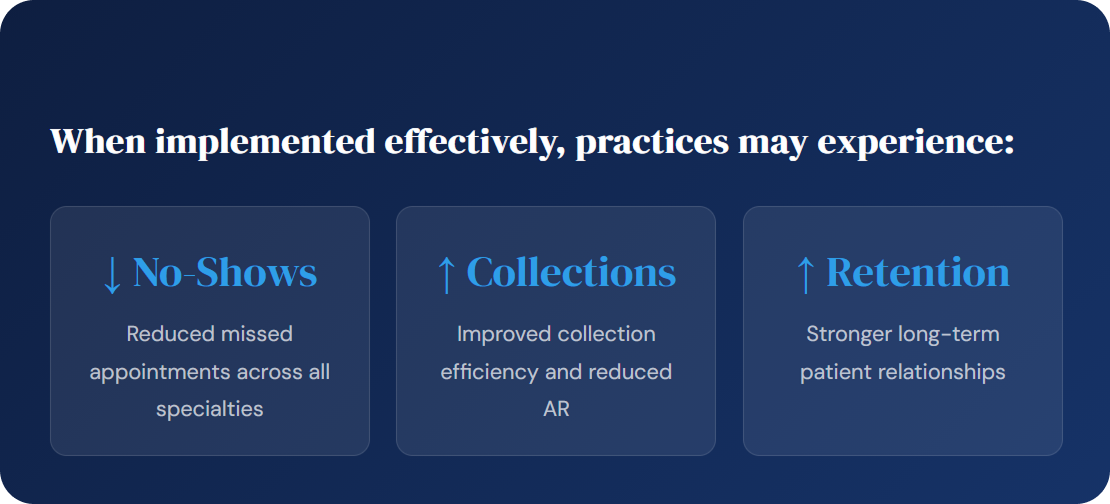
Actual results vary based on practice size, specialty, patient demographics, and implementation approach.
Modern patient engagement is no longer a competitive advantage. It's becoming an operational necessity. Practices that improve communication, simplify scheduling, and create convenient financial experiences are often better positioned to improve patient satisfaction, reduce administrative burden, and strengthen financial performance.


